
25. Question Tags

Section outline
-
A Question Tag is a short question, added to a statement, in order to get it confirmed.
Example:
Sam is coming for the party, isn't he?
There are two types of question tags:
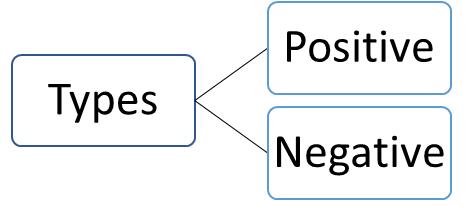
Positive Question Tag:
It is attached to negative statements.
Example:
She can swim, can't she?
Negative Question Tag:
It is attached to positive statements.
Example:
You don't like coffee, do you?
-
Rules to form question tags:
1. After the statement ends, insert a comma followed by the question tag & question mark.
Thus, a statement is turned into a interrogative sentence by adding question tag.
2. A question tag consists of only two words.
3. The two words are the auxiliary / modal verb & pronoun of the subject.
4. The auxiliary / modal verb used in the statement & question tag should be the same.
Example:
Sachin is a good player, isn't he?
Here 'is' is the auxiliary verb in the statement and the same is used in the question tag.
We use contractions of negative auxiliary verbs.
5. The subject & pronoun used in the question tag should be same.
Example:
The dog is very faithful, isn't it?
Here, the pronoun 'it' is used for the subject 'dog'.
6. If statement is negative, question tag should be positive.
Example:
You are not happy, are you?
7. If statement is positive, question tag should be negative.
Example:
The fruits are fresh, aren't they?
8. A question tag I am is aren't I or ain't I.
Examples:
- I am late, aren't I?
- I'm not late, am I?
9. If statement has no auxiliary verb, use 'do / does / did' based on the tense.
Examples:
- You like apples, don't you?
- She went there, didn't she?
10. For positive commands, use 'will / won't you'.
Examples:
- Close the door, will you?
- Please take a seat, will you?
11. For negative commands, use 'will you'.
Examples:
- Don't touch that, will you?
- Don't speak loudly, will you?
12. If there is 'let us' in the statement, use 'shall we'.
Example:
Let us sit down, shall we?
-
In this course, we learn't:
- Question tags are short questions.
- They are used to get confirmation of a statement.
- The use of positive & negative questions tags.
- All the rules to form all various types of question tags.
In the next course, we will understand the different voices in English Grammar.