
16. Present Tense

Section outline
-
Tenses are verb forms which indicate the time of an action done by the subject.
Following are the three main tenses and their sub types:
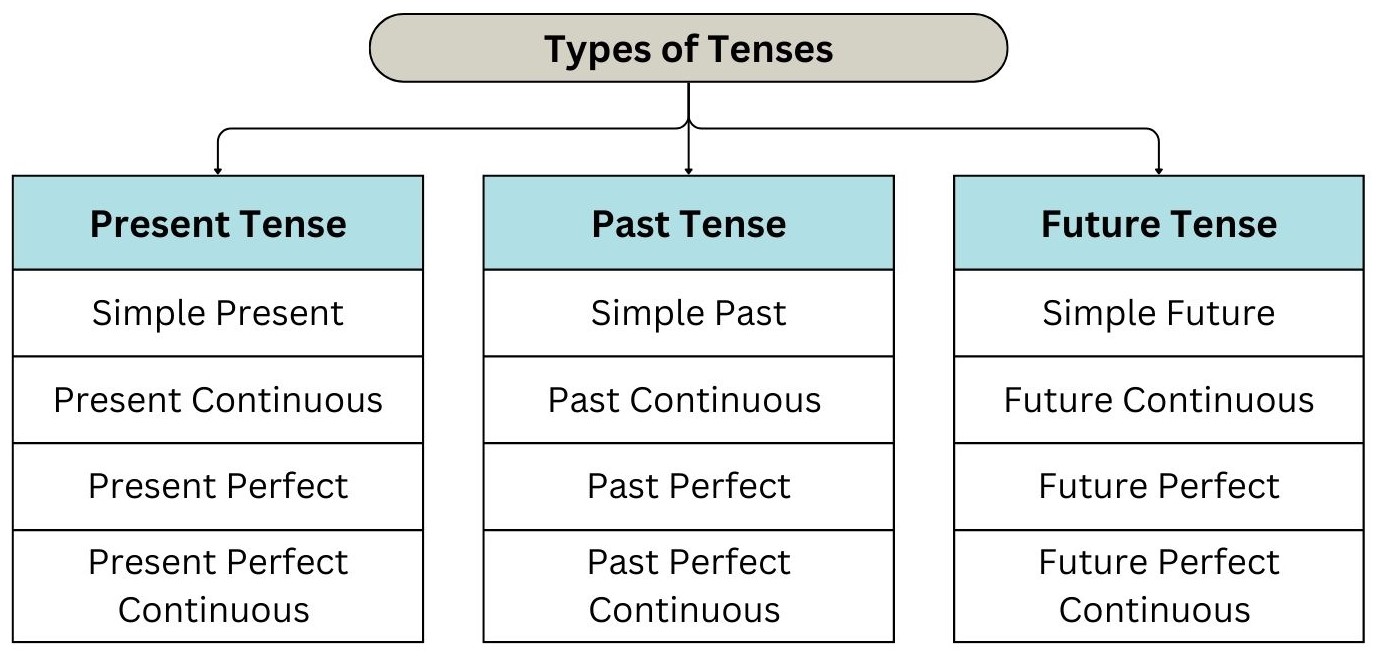
-
Present Tense expresses actions happening now i.e. in the current time.
Example:
The children are in the classrooms.
Auxiliary Verbs used in Present Tense:
Subject Verb Examples I am, have I am hungry. I have a pen. He, she, it & singular nouns is, has He is hungry. It has wings. We, you, they & plural subjects are, have We are hungry. You are generous. They have a car. -
There are four types of present tense:
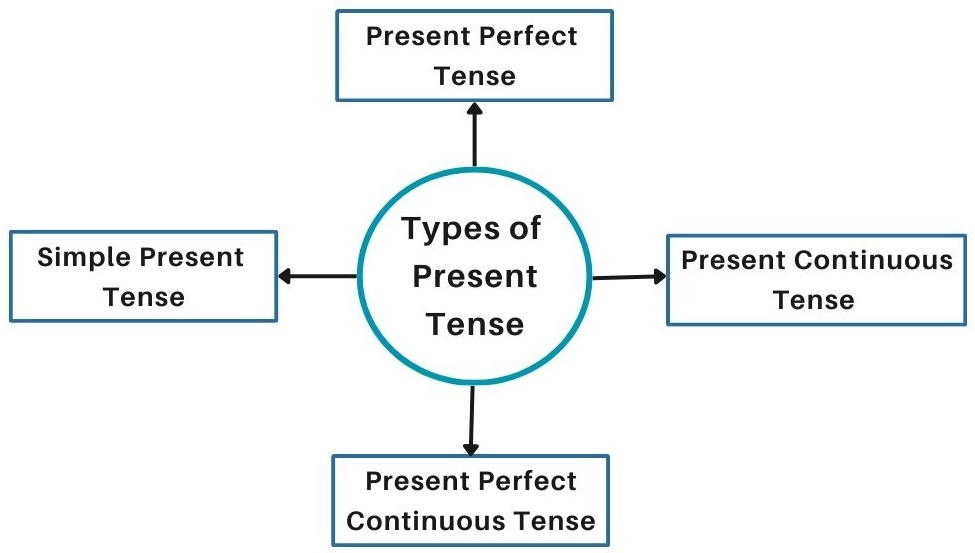
Let's study each of them in detail.
-
-
Simple Present Tense is the basic form of verb in present tense.
It is also known as Present Simple or Present Indefinite Tense.
To form Simple Present Tense:
1. For pronoun 'I':
Type of sentence Verb Example Affirmative am I am happy. plural form I stay in Mumbai. Negative am not (ain't) I am not sad. do not (don't) I don’t eat meat. Interrogative am Am I late? Do + you + Verb Do you play cricket? 2. For 'he, she, it & singular nouns':
Type of sentence Verb Example Affirmative is She is in the garden. singular form The Sun shines brightly. Negative is not (isn't) He isn't in the room. does not (doesn't) You don’t come with us. Interrogative is Is that your cat? Does + subject + Verb Does she play cricket? 3. For 'we, they, you & plural nouns':
Type of sentence Verb Example Affirmative are They are in the garden. plural form The Sun shines brightly. Negative are not (aren't) We aren't late. don't He doesn't play cricket. Interrogative are Are the children hungry? Do + subject + Verb Do they play cricket? * For correct use of singular or plural form of verb with respective nouns & pronouns & to know all the rules to form singular verbs, understand the course on subject verb agreement.
Use:
To Express Examples A scientific fact or general truth. Summer comes after spring. An habitual action / event. We go to school every day. Actions arranged for future. We move to London in a month. General instructions. Mix 10ml water in this powder. To quote someone for words spoken in past. Sam says he’s done. Stative verbs for present state of mind. Tom thinks you are right. A completed action for news headline or recounting events of a story. Roger Federer wins Wimbledon. Commentary of events as they occur. The goal keeper dives to block the ball. -
Present Continuous / Progressive Tense refers to actions continuously happening in the present.
To form Simple Present Tense:
1. For pronoun 'I':
Type of sentence Verb Example Affirmative am + present participle I am playing football. Negative am not + present participle I'm not playing football. Interrogative am + subject + present participle Am I playing football well? 2. For 'he, she, it & singular nouns':
Type of sentence Verb Example Affirmative is + present participle He is playing football. Negative isn't + present participle The insect isn't flying. Interrogative is + subject + present participle Is the child playing football?
3. For 'we, they, you & plural nouns':Type of sentence Verb Example Affirmative are + present participle The boys are playing football. Negative aren't + present participle They aren't coming today. Interrogative are + subject + present participle Are you playing football? For more information on present participle, click here.
Use:
To express Examples Action going on in present. Sam is playing football. Fixed / pre-planned future event. They are shifting to Paris next weekend. Temporary actions or situations. My father is living in Dubai for two weeks. Action happening around the present. I am preparing for dinner. Actions happening repeatedly. Jane is always coming late to school. Present trends. Now days, everyone is using smartphones. Dynamic state of mind or being. I am thinking to take a break. -
Present Perfect Tense is the link between the past & the present.
To form present perfect tense:
1. For 'he, she, it & singular nouns':
Type of sentence Verb Example Affirmative has + past participle The cat has slept all day. Negative hasn't + past participle Tom hasn't gone out today. Interrogative has + subject + past participle Has she forgotten the cake? 2. For 'I, we, they, you & plural nouns':
Type of sentence Verb Example Affirmative have + past participle I have collected the papers. They have eaten dinner. Negative haven't + past participle We haven’t gone out. Interrogative have + subject + past participle Have you found a house? For more information on past participle, click here.
Use:
To Express actions Examples Begin in the past but affect in the present. They have opened a new shop. Done in a time frame which are unfinished. He has studied hard for this exam. Done repeatedly in past which continue in the present. Tom has worked here since he left college. That are completed in the recent past. We have just finished our dinner. Carrying on in the present. I have never met my aunt. Where time period is not important. I have read ‘Harry Potter’. Happened in the past but relevant while speaking in the present. Jane has lost her wallet. -
Present Perfect Continuous Tense tells us about actions started in the past but are continuing in the present.
To form present perfect continuous tense:
1. For 'he, she, it & singular nouns':
Type of sentence Verb Example Affirmative has been + present participle Sam has been working all day. Negative hasn't been+ present participle He hasn’t been eating anything. Interrogative has been + subject + present participle Has Riya been waiting for me? 2. For 'I, we, they, you & plural nouns':
Type of sentence Verb Example Affirmative have been + present participle They have been watching the match. Negative haven't been + present participle We haven’t gone out. Interrogative have been + subject + present participle Have you been sleeping well? For more information on present participle, click here.
Use:
To Express actions Examples Started in the past and continue in the present. I have been living in this apartment for three years. Just finished but we are interested in the results. It has been raining since last night. -
In this course, we learnt about present tense, which can be summarized as follows:
Rules to form present tenses:
1. For 'he, she, it & singular nouns':
Tense Verbs Simple Present is / singular verb Present Continuous is + present participle Present Perfect has + past participle Present Perfect Continuous has been + present participle Examples:
Simple Present Present Continuous Present Perfect Present Perfect Continuous The child walks. The child is walking. The child has walked. The child has been walking. He walks. He is walking. He has walked. He has been walking. 2. For 'I, we, they, you & plural nouns':
Tense Verbs Simple Present am / are / plural verb Present Continuous am / are + present participle Present Perfect have + past participle Present Perfect Continuous have been + present participle Examples:
Simple Present Present Continuous Present Perfect Present Perfect Continuous I walk. I am walking. I have walked. I have been walking. They walk. They are walking. They have walked. They have been walking. In the next course, we will be learning about past tense.